

Computation Implementation in Physics Numerical Simulations in Blackhole using MATLAB

Overview
Black holes are one of the most fascinating and enigmatic phenomena in the universe. These objects are formed when massive stars run out of fuel and collapse under their own gravity, creating a region of space where gravity is so strong that nothing, not even light, can escape. Understanding the behavior of black holes is essential to uncover some of the fundamental laws of physics that govern the universe.
One way to study black holes is through numerical simulations, which involve using computers to solve complex equations that describe their behavior. MATLAB, a popular programming language and numerical computing environment, is particularly useful for this type of simulation. In this blog post, we will explore how numerical simulations in MATLAB can help us better understand the mysteries of black holes.

Numerical Simulations in MATLAB on Blackhole
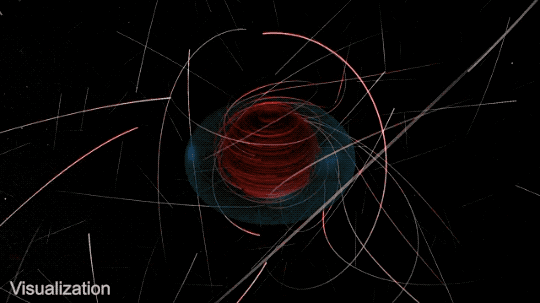
Numerical simulations of black holes involve solving the equations of general relativity, which describe the curvature of spacetime caused by the presence of massive objects. These equations are notoriously difficult to solve analytically, which is why numerical simulations are so important. MATLAB provides a powerful set of tools for solving complex equations numerically. For example, the built-in functions for solving ordinary and partial differential equations can be used to simulate the behavior of black holes. In addition, MATLAB also has a variety of visualization tools that allow us to create 3D models of black holes and their surroundings, making it easier to understand the complex physics involved.
Basic Code Snippet
% Parameters
M = 1;          % Mass of black hole
c = 1;          % Speed of light
G = 1;          % Gravitational constant
rs = (2GM)/(c^2); % Schwarzschild radius

% Coordinates
rmin = rs + 0.01;        % Minimum radius
rmax = 100;              % Maximum radius
N = 1000;                % Number of points
r = linspace(rmin, rmax, N); % Radial coordinate
theta = linspace(0, pi, N); % Polar angle

% Metric coefficients
g_tt = -(1-rs./r);
g_rr = 1./(1-rs./r);
g_theta_theta = r.^2;

% Calculate Christoffel symbols
for i = 1:N
    for j = 1:N
        for k = 1:N
            gamma(i,j,k) = 0.5g_rr(i)(diff(g_rr(j),theta(k))+diff(g_rr(k),theta(j))-diff(g_rr(theta(j)),r(i)));
        end
    end
end

% Calculate Riemann curvature tensor
for i = 1:N
    for j = 1:N
        for k = 1:N
            for l = 1:N
                R(i,j,k,l) = diff(gamma(i,j,l),r(k)) - diff(gamma(i,j,k),r(l));
                for m = 1:N
                    R(i,j,k,l) = R(i,j,k,l) + gamma(i,m,l)*gamma(m,j,k) - gamma(i,m,k)*gamma(m,j,l);
                end
                R(i,j,k,l) = simplify(R(i,j,k,l));
            end
        end
    end
end

% Plot Riemann curvature tensor
figure
[X,Y] = meshgrid(r,theta);
Z = R(1,2,1,2);
surf(X,Y,Z)
title('Riemann curvature tensor')
xlabel('r')
ylabel('theta')
This code calculates the metric coefficients, Christoffel symbols, and Riemann curvature tensor for a simple black hole. The resulting Riemann curvature tensor is then plotted in a 3D surface plot. Note that this code is just a simple example and does not take into account many of the complexities involved in simulating black holes, such as the effects of rotation and matter accretion. However, it provides a starting point for exploring the behavior of black holes using numerical simulations in MATLAB.
Key Advantage of Leveraging Computation
Why numerical simulations especially in blackhole are needed Numerical simulations are needed to study black holes because the equations that describe their behavior are notoriously difficult to solve analytically. Black holes are described by the theory of general relativity, which involves complex mathematical equations that cannot be solved using traditional methods. Numerical simulations allow us to solve these equations using computer algorithms. By discretizing the equations and solving them numerically, we can simulate the behavior of black holes and their surroundings. This allows us to study phenomena that would be difficult or impossible to observe in real life, such as the collision of two black holes or the behavior of matter as it falls into a black hole. Furthermore, numerical simulations can be used to test different hypotheses and theories about black holes. By adjusting the parameters of the simulation, we can explore different scenarios and test the predictions of different theories. This can help us refine our understanding of the behavior of black holes and the laws of physics that govern them. Overall, numerical simulations are an essential tool for studying black holes and understanding the fundamental laws of physics that govern the universe. Without numerical simulations, our understanding of black holes and their behavior would be severely limited.
In a Nutshell
Numerical simulations are an essential tool for studying black holes because the equations that describe their behavior are notoriously difficult to solve analytically. Black holes are described by the theory of general relativity, which involves complex mathematical equations that cannot be solved using traditional methods.
- Numerical simulations allow us to solve these equations using computer algorithms. By discretizing the equations and solving them numerically, we can simulate the behavior of black holes and their surroundings.
- This allows us to study phenomena that would be difficult or impossible to observe in real life, such as the collision of two black holes or the behavior of matter as it falls into a black hole.
- Furthermore, numerical simulations can be used to test different hypotheses and theories about black holes. By adjusting the parameters of the simulation, we can explore different scenarios and test the predictions of different theories.
- This can help us refine our understanding of the behavior of black holes and the laws of physics that govern them.
Overall, numerical simulations are a powerful tool that allow us to study black holes and understand the fundamental laws of physics that govern the universe. They are essential for our continued progress in understanding these fascinating objects and their behavior.
Epilogue
In conclusion, numerical simulations have become a vital tool for studying black holes and other complex physical phenomena. The equations that describe black holes are incredibly difficult to solve analytically, and numerical simulations allow us to model their behavior in a way that would otherwise be impossible. By running simulations with different parameters, scientists can explore a wide range of scenarios and test various theories about black holes.
